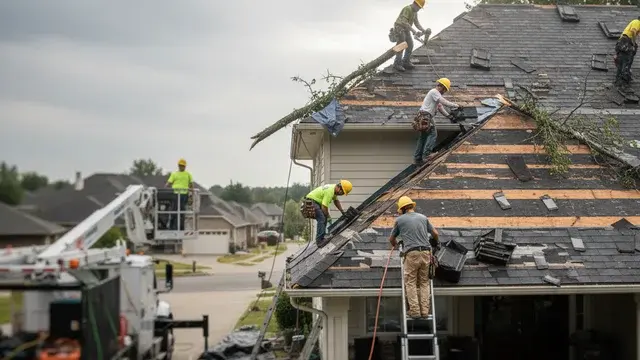
Red Oak sits in the heart of North Texas, which means four seasons worth of severe weather. Understanding the specific storm risks in our area helps homeowners and business owners prepare properly. Here are the top storm damage risks for Red Oak, TX properties and what you can do about them.
Risk 1 — Hail Damage
North Texas is in the heart of Hail Alley. Major hail events happen multiple times per year, with stones large enough to puncture roofing, break windows, dent siding, and damage vehicles.
Hail damage often looks minor from the ground but causes significant roof damage. Professional inspection after every major storm is worth the time — hidden damage can lead to roof failure later.
Risk 2 — Straight-Line Winds
North Texas thunderstorms frequently produce straight-line winds that can match tornado-level damage without the rotation. Speeds of 60 to 90 mph are common in severe events.
Wind damage includes shingles lifted off roofs, broken tree limbs falling on structures, fences blown down, and wind-driven rain infiltrating through openings.
Risk 3 — Freeze Events
Recent winters have demonstrated that major freeze events in North Texas can cause widespread burst pipe damage. Houses here are not always built for sustained cold, which makes them particularly vulnerable.
During a multi-day freeze, thousands of Red Oak area homes can experience burst pipes simultaneously. This creates restoration surge conditions.
Risk 4 — Flash Flooding
Heavy rain in short periods can overwhelm drainage systems, creeks, and low-lying areas. Flash flooding affects specific parts of Red Oak, Glenn Heights, Ferris, and Lancaster disproportionately.
Flood damage from rising water is not covered by standard homeowners insurance — a separate flood policy is required.
Risk 5 — Tornado Risk
While tornadoes are less common in Ellis County than in some other parts of Texas, they do occur. Tornado damage can range from minor wind effects to total destruction.
Even homes not directly hit by a tornado often suffer damage from flying debris during tornado-producing storms.
Risk 6 — Tree Damage
Large trees are common in older Red Oak neighborhoods. High winds, ice, and saturated soil can bring trees or large limbs down on homes, vehicles, and structures.
Tree damage often causes both structural damage and water intrusion where the tree punctures the roof or wall.
Preparation Checklist
What Red Oak property owners can do to reduce storm damage risk:
- Inspect roofs annually before storm season
- Trim trees back from the house and power lines
- Clean gutters and downspouts regularly
- Insulate attic and exterior wall pipes for freeze protection
- Know your main water shut-off location
- Photograph home interior and exterior for insurance records
- Verify flood insurance coverage if in a flood-prone area
- Have a family emergency plan for severe weather
- Keep an emergency kit with flashlights, batteries, water
- Save phone numbers for insurance and restoration company
When Storm Damage Happens
If your property is damaged by a storm:
- Make sure everyone is safe first
- Document damage with photos before cleanup
- Call your insurance company
- Call a restoration company for emergency board-up and tarping
- Prevent secondary damage by securing the property
- Do not attempt roof work or tree removal yourself during dangerous conditions
Final Thoughts
Red Oak's location means regular exposure to serious weather. Preparation reduces risk but cannot eliminate it. When storms do cause damage, Good Fellas Restoration is ready 24/7 for fast response across Red Oak and Ellis County.