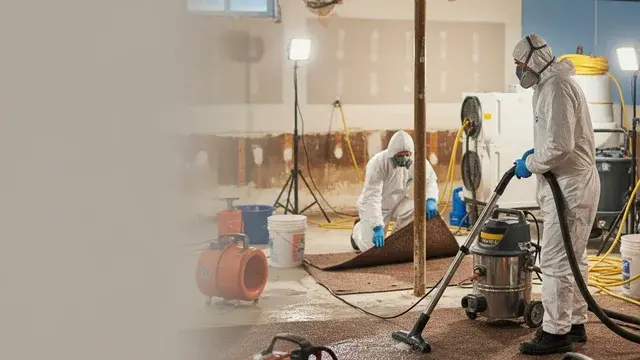
Burst pipes are one of the most common water damage emergencies in Red Oak, TX. A single burst can flood a home with hundreds of gallons of water in just a few minutes. Understanding what causes burst pipes — and what to do about it — can save you a major restoration project.
Cause 1 — Freezing Temperatures
Frozen pipes are the single most common cause of burst pipes in North Texas. When water freezes, it expands by about 9%. If that expansion happens inside a closed pipe with nowhere to go, the pipe splits.
Texas freeze events in recent winters have caused widespread burst pipe damage across Red Oak, Waxahachie, Midlothian, and the rest of the DFW metro. Homes here are not always built to cold-weather standards, which makes them especially vulnerable.
Cause 2 — Water Pressure Problems
Water pressure that is too high puts constant stress on pipes, fittings, and valves. Most residential plumbing is rated for 40 to 80 PSI. Water pressure above this range can cause pipes and joints to fail over time.
A pressure-reducing valve at the main water line is the usual fix, and pressure gauges are inexpensive to check your home pressure.
Cause 3 — Corrosion
Older galvanized pipes corrode from the inside, gradually weakening until they fail. Copper pipes can develop pinhole leaks from electrolysis or water chemistry issues.
Homes built before the mid-1980s sometimes still have original galvanized plumbing, which is near the end of its useful life. Re-piping is often the permanent fix.
Cause 4 — Clogs That Create Pressure
A serious clog downstream of a pipe can cause pressure to back up to the point of rupture. This is more common in drain lines than in supply lines, but either can happen.
Hot water recirculation system failures are another version of this problem — flow gets restricted and pressure builds.
Cause 5 — Pipe Movement and Mechanical Damage
Pipes that are not properly secured can move, rub, and wear against framing over time. Construction work, remodeling, or pounding nails near pipes can also cause damage that eventually leads to failure.
Pipes in attics or crawlspaces are especially vulnerable to mechanical damage from stored items, animals, or HVAC work.
How to Prevent Burst Pipes
Prevention is much cheaper than restoration. Key prevention steps for Red Oak homeowners:
- Insulate pipes in attics, crawlspaces, exterior walls, and unheated garages
- Keep interior temperature above 55°F during winter, even when away
- During freeze events, let faucets drip on exterior walls
- Open cabinet doors under sinks to let warm air reach pipes
- Disconnect garden hoses in fall
- Install a main water shut-off you can reach quickly
- Know where your shut-off is before you need it
- Check water pressure annually
- Replace old galvanized or polybutylene plumbing before it fails
What to Do When a Pipe Bursts
When a burst happens, speed matters:
- Shut off the main water valve immediately
- Turn off electricity to affected rooms if safe
- Move valuables out of the water
- Call Good Fellas Restoration for emergency extraction and drying
- Call your plumber to repair the pipe
- Document everything for your insurance claim
Final Thoughts
Most burst pipes are preventable with basic winterization and plumbing maintenance. When they do happen, fast response matters more than anything. Good Fellas Restoration responds 24/7 across Red Oak and Ellis County for burst pipe emergencies.