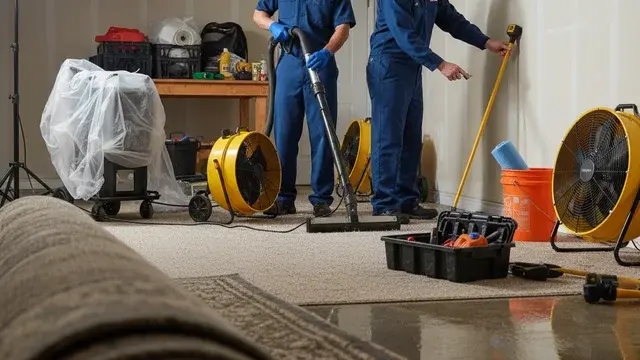
Wet drywall is one of the most common decisions in water damage restoration — can we dry it, or does it have to come out? The answer depends on a few specific factors that experienced restoration technicians evaluate every day. Here is how the decision is actually made.
The Three Factors That Matter
When professional restoration technicians assess wet drywall, three factors determine whether it can be saved:
- Category of water (1, 2, or 3)
- How long the drywall has been wet
- How saturated the drywall is
Factor 1 — Category of Water
Water damage is categorized by contamination level. Category 1 is clean water from a supply line. Category 2 is gray water with some contamination. Category 3 is black water — sewage, flood water, or heavily contaminated sources.
Category 1 drywall can often be dried and saved. Category 2 drywall is sometimes salvageable but requires antimicrobial treatment. Category 3 drywall must be removed — the contamination cannot be safely dried.
Factor 2 — How Long It Has Been Wet
Time matters more than most homeowners realize. Drywall that has been wet for less than 24 hours with clean water is often salvageable. Drywall wet for 48 hours is borderline. Drywall wet for 72 hours or more almost always has to be removed.
This is because of two problems: structural degradation of the gypsum and paper, and mold colonization. Both get worse with time.
Factor 3 — Saturation Level
Drywall that is just damp at the edge may dry well. Drywall that has absorbed water up a full 12 to 24 inches from the floor typically cannot be saved — the paper facing has separated, and the gypsum has lost strength.
Moisture meters specifically designed for drywall give an objective reading. Anything over about 17% moisture content is a candidate for removal.
What Drying In Place Looks Like
If drywall can be dried in place, the process involves:
- Removing baseboards to expose the edge of the drywall
- Drilling small ventilation holes to dry the wall cavity
- Running air movers across the wall surface
- Running dehumidifiers to pull moisture out of the air
- Daily moisture readings to track progress
- Antimicrobial treatment as needed
When Drywall Has to Be Removed
When the evaluation points to removal, professional restoration crews make clean horizontal cuts at standardized heights — usually 2 feet or 4 feet above the floor. This makes replacement faster and gives a cleaner final finish.
Only the wet portion is removed, not the whole wall. The cavity dries, new drywall is installed, and the finish is matched to the existing wall.
Common Mistakes Homeowners Make
A few common mistakes make wet drywall problems worse:
- Painting over water-stained drywall without inspecting the cavity
- Leaving baseboards in place during drying (traps moisture)
- Using household fans instead of professional air movers
- Assuming drywall is dry because the surface looks dry
- Ignoring wet drywall for weeks hoping it will self-resolve
Final Thoughts
Wet drywall decisions are made based on water category, time, and saturation level. A professional restoration team uses moisture meters and experience to make the right call for each section of drywall in your Red Oak home. When in doubt, call Good Fellas Restoration for a professional evaluation.